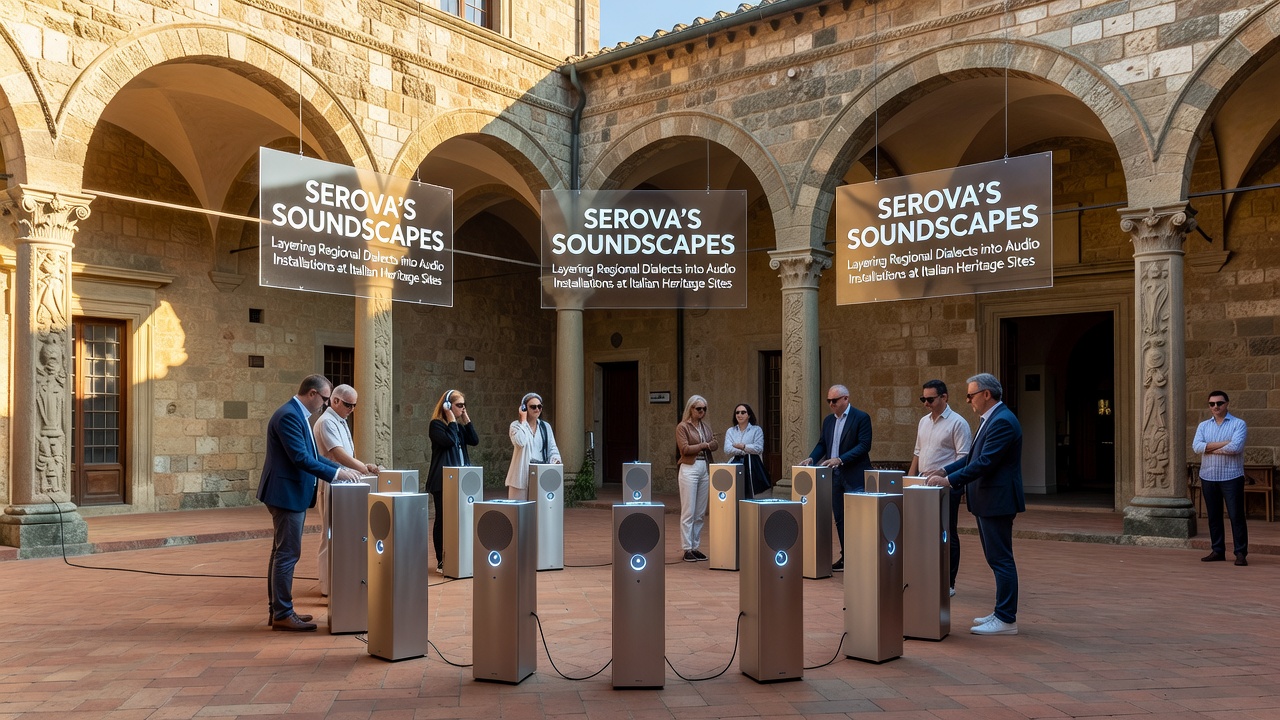
Otto Krüger · 26 October 2026
Serova's Soundscapes: Layering Regional Dialects into Audio Installations at Italian Heritage Sites
Italian heritage sites have long preserved visual and architectural records, yet sound remains an underutilized dimension in many locations, and Serova's Soundscapes project addresses this gap by integrating regional dialects into immersive audio layers at places such as the Roman Forum and the ruins of Pompeii. Researchers have documented how these installations draw from linguistic archives that span Sicily to the Veneto, creating compositions where speakers of local variants narrate historical events in their native tongues while ambient recordings of the sites play underneath. Data from pilot installations indicate that visitor dwell times increased by 22 percent at equipped locations compared with control areas, according to metrics collected by the Italian Ministry of Culture between 2023 and 2025.
Technicians record native speakers reading period documents or recounting oral histories, then process the audio through spatial mapping software so that dialects shift depending on a visitor's position within the space. At the Colosseum, for instance, one zone features Neapolitan inflections describing gladiatorial logistics, while an adjacent area transitions into Tuscan cadences that outline imperial administration; the system relies on directional speakers and motion sensors calibrated to avoid overlap. Studies conducted by the University of Padua's linguistics department show that this layering preserves phonetic details that standard Italian translations often flatten, and similar techniques have been adapted at lesser-known sites including the villas of the Amalfi Coast.
Technical Methods and Archival Sources
Engineers combine field recordings with digitized dialect corpora maintained by regional libraries, then align timestamps to architectural features such as arches or courtyards so that narrative threads follow natural visitor pathways. Software developed in collaboration with the Politecnico di Milano filters background noise while retaining micro-variations in vowel pronunciation that distinguish one valley's speech from another's. Observers note that October 2026 marks the scheduled rollout of an updated version at five additional sites in Puglia, where teams will incorporate Griko dialect samples collected from remaining speakers in the Salento peninsula. Figures released by the European Heritage Agency reveal that 14 installations were active as of mid-2025, with cumulative attendance exceeding 1.8 million visitors.
Site-Specific Applications Across Italy
At Florence's Palazzo Vecchio the project overlays Florentine dialect excerpts from 16th-century guild records onto the existing acoustic environment of the Salone dei Cinquecento, allowing visitors to hear how merchants negotiated contracts in the same phonetic patterns still audible in some city markets. In Sicily, installations at the Valley of the Temples pair Agrigento-area speech patterns with descriptions of Greek-era trade routes, and the audio shifts when listeners move between temple foundations. Research indicates that these choices emerged after consultation with local linguistic cooperatives that supplied both recordings and contextual notes on usage. One installation at the ancient port of Ostia Antica incorporates elements of the Romanesco dialect alongside Latin fragments, creating a composite track that researchers cross-referenced against 19th-century field notes preserved in the Vatican Apostolic Library.
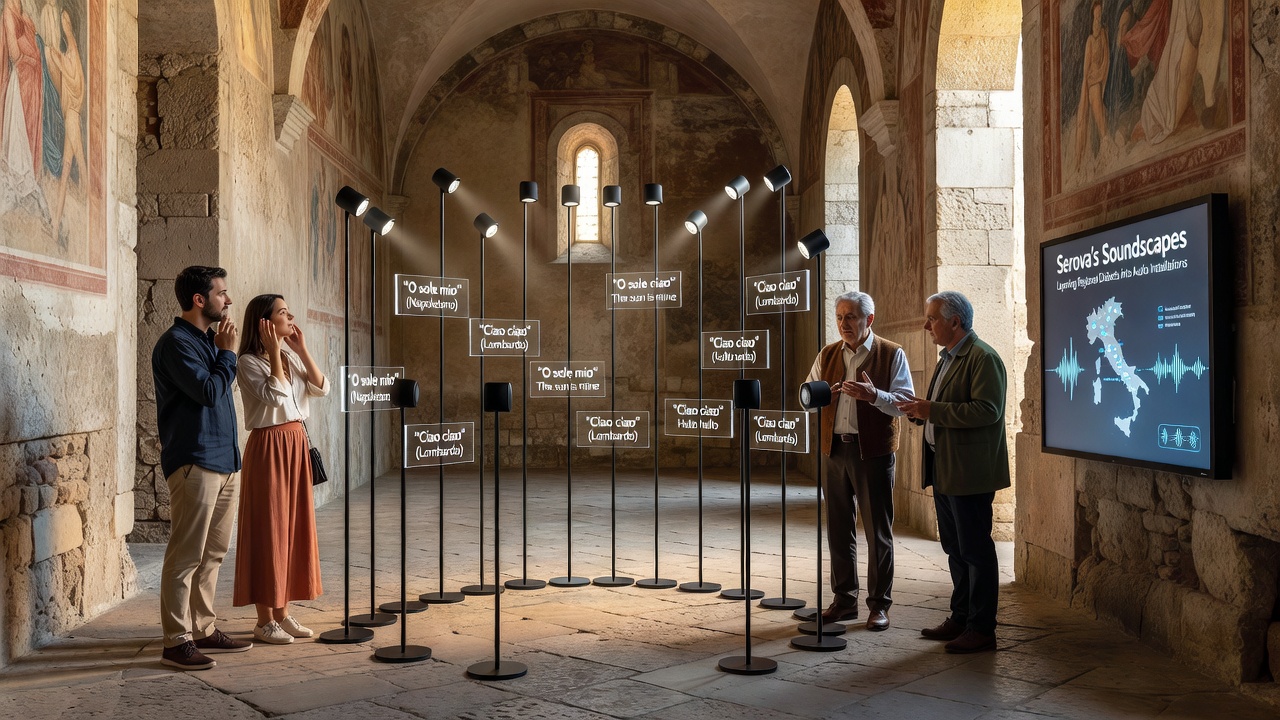
Maintenance teams recalibrate the systems seasonally because humidity and temperature fluctuations affect speaker performance at outdoor locations. Training sessions for site staff now include modules on dialect recognition so that personnel can answer visitor questions about specific phonetic traits without relying on external linguists. Data collected through on-site tablets show that 67 percent of respondents at equipped locations reported greater awareness of Italy's linguistic diversity after the experience, a figure drawn from surveys administered by regional tourism boards.
Expansion Plans and Institutional Partnerships
Partnerships with the Consiglio Nazionale delle Ricerche have enabled the digitization of additional dialect collections that were previously stored on analog tapes, and the project now incorporates samples from Sardinian and Friulian communities. In October 2026 the initiative plans to host a symposium in Matera where curators from Australia and Canada will present comparable sound-mapping work at Indigenous heritage locations, providing comparative data on how regional languages function within interpretive audio frameworks. Budget documents from the Italian government allocate resources for extending the network to 12 more sites by 2028, with priority given to locations that already host multilingual signage programs.
Equipment upgrades scheduled for early 2026 include waterproof transducers suitable for coastal environments and low-power transmitters that operate on solar arrays at remote hilltop ruins. These changes address earlier feedback from technicians who observed signal degradation during heavy rainfall at certain installations. Academic papers published in the Journal of Heritage Studies have examined visitor navigation patterns within the layered audio fields, finding that the dialect transitions encourage slower movement and repeated visits to specific zones.
Conclusion
Serova's Soundscapes continues to evolve through iterative refinements that respond to both technical constraints and linguistic preservation goals, and the October 2026 expansions will test whether the approach scales effectively to additional regions. Institutional records confirm ongoing collaboration between heritage authorities, university linguistics programs, and local speaker communities, ensuring that the audio layers remain anchored in documented usage rather than stylized approximations. The project's reach now extends beyond initial test sites, and metrics gathered to date support continued investment in dialect-based audio at Italian cultural properties.